Interfaith Dialogue
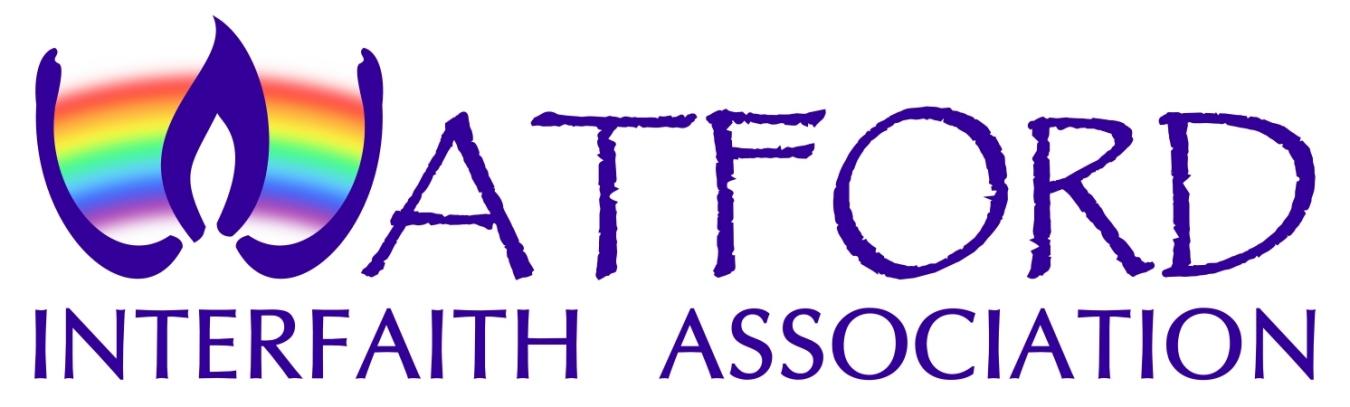
WIFA has always had what was then known as a House Group, as members from different faiths used to meet in each other’s homes several times a year to discuss a topic of interest. Later, WIFA held their group discussions at the Watford Fire Station community room and during the Covid-19 pandemic the discussion went online. The regular prayer/discussion meetings explored various religious traditions and presented the faith perspectives on topics such as euthanasia, environment, prayer, pornography and more. Over the years WIFA has also held the Sacred Space at the annual Watford Celebration, inviting representatives of many faiths to discuss a chosen topic. Since 2009, WIFA introduced the annual Memorial Harold Meyer Lectures inviting eminent speakers to address our multi faith community.
Our monthly Prayer/Discussion meetings discovering different faith perspectives on various topics, will be held on the 4th Tuesday of each month at 8.00pm on Zoom.
Sacred Space: ‘Ancient Root - Digital Wings’
05/07/2026
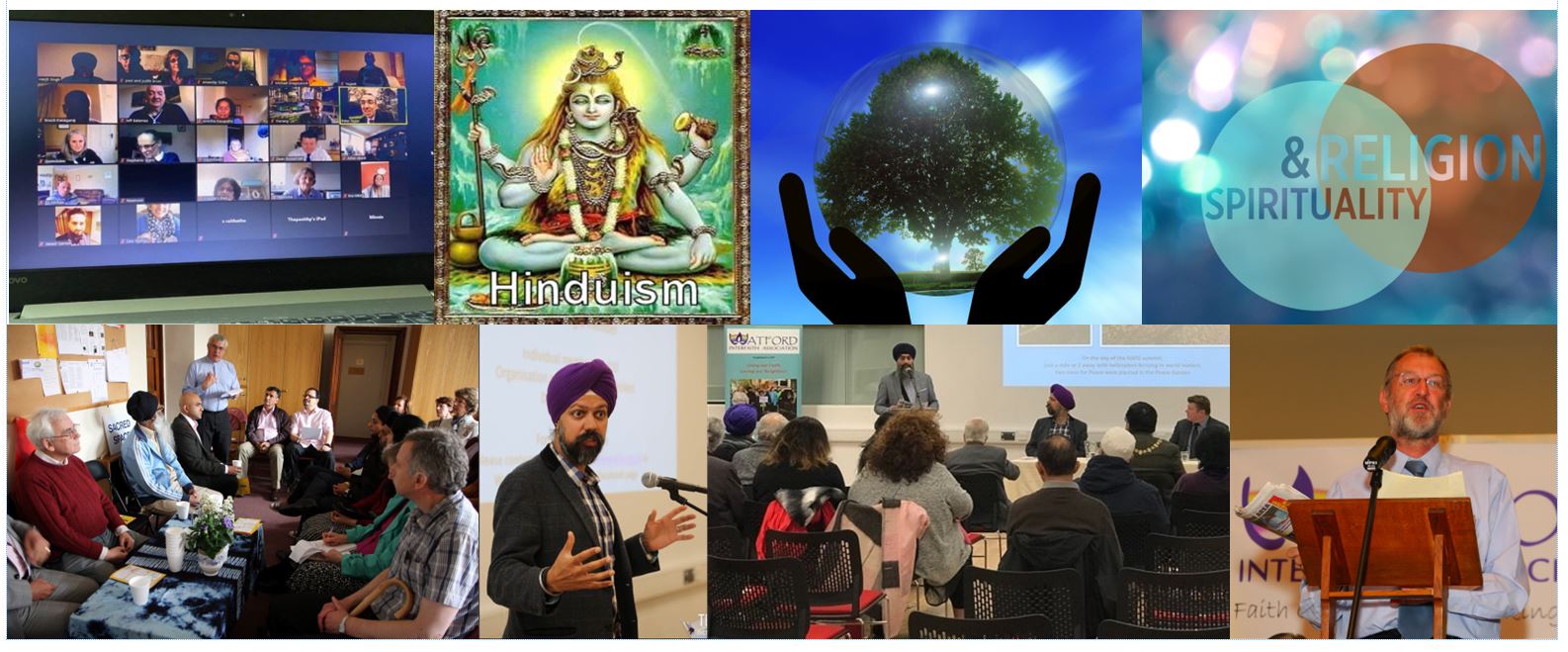
Many gathered at the Friends Meeting House on Sunday afternoon for a Sacred Space event to discuss bridging the gap between faith and technology. Organized by the Brahma Kumaris and led by Sister Bini, the event addressed the generational divide that has emerged through the use of digital technology, AI, and similar advancements.
Following welcoming remarks from Sister Bini, a young boy in Year 4 delighted the audience with a performance of several classical pieces on his guitar. Afterward, four pairs of senior and younger members from different faiths and belief systems participated in a panel discussion. The participants represented the Brahma Kumaris, Muslim, and Hindu faiths, as well as Humanist beliefs, with the session facilitated by Yogesh Joshi, Vice Chair of WIFA.
The younger speakers focused on how technology and AI have enhanced access to information, noting that learning about faith and scriptures can sometimes feel intimidating. While the elders acknowledged the usefulness of technology, they advised using wisdom, maintaining core values, and balancing reason with spiritual endeavour. Some speakers pointed out that older generations require training to use technology properly, while children often lack guidance on its wise and responsible use.
The audience raised questions about the wisdom of allowing babies in prams to use mobile phones, government actions to control the adverse effects of social media, and whether mobile phones should be banned for children under 16. Discussions also touched upon how faith communities can work with politicians to address mental health issues and ethical AI development.
To conclude, the speakers addressed the question, "What comes next?" They emphasized applying ancient wisdom to daily life, providing human values education for children, using technology mindfully, and setting a positive example.
Deputy Mayor Aga Dychton closed by calling it a beautiful event and topic, reminding everyone to prioritize connection and compassion above all else. Finally, Jeffrey Bateman played the Indian flute as Yogesh and Sister Bini thanked everyone for attending and contributing.
Harold Meyer Memorial Lecture:
‘Faith and the Future, empowering young voices for inclusive communities’
18/05/2026.
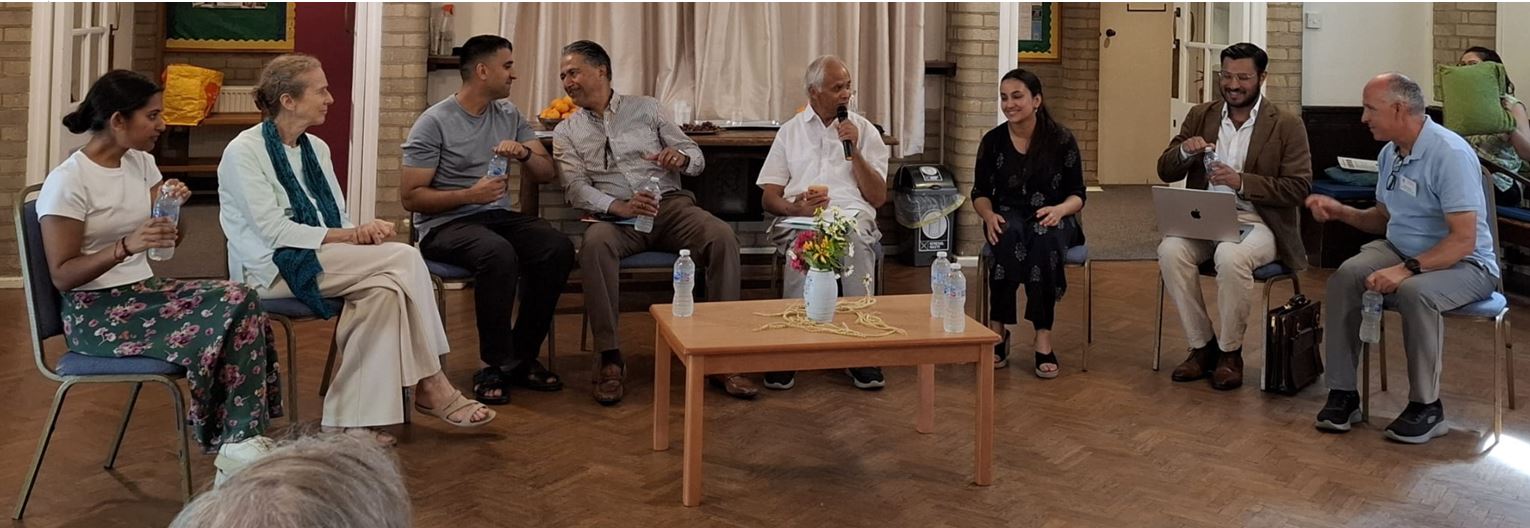
WIFA's Harold Meyer Memorial Lecture was held on Monday 18th May at Watford Football Club Players’ Lounge. The title of the lecture given by Temi Fawehinmi was on Faith and the Future, empowering young voices for inclusive communities. Using her own experiences of having been born in Africa, fostered and taken to America, then returned to her own parents in Africa and moving to the UK meant she had to adapt between being called a golliwog and sitting in a corner in one place and being invited to every party going in another because she had an American accent. When her son became unwell, she could not get treatment for him because the doctors and health visitors would not listen to her concerns. It turned out that her son had a severe heart condition.
This, she felt, made her a good candidate for the job of head of Diversity, Inclusion and Wellbeing at Hertfordshire County Council. She also found a faith community that was welcoming and inclusive, which is now her 'spiritual home'. With the use of interactive methods, she asked the audience when was the last time they had meaningfully engaged in conversation with a young person, and challenged everyone to think about interfaith more deeply, and fill buckets with our thoughts, for example, among many other interactive ploys.
Interfaith perception is changing. Young people don't necessarily follow their family's traditions; they choose the way they find their spirituality. It behoves older people to create safe spaces for honest dialogue and let them speak. Surveys also show that young people see interfaith work as social action. All this make space for youngsters with special needs, and the NSPCC gives training to faith communities to help in this.
She finished with the reflection, 'If we invest in young people today, we secure the future leadership of communities tomorrow.'
The audience really enjoyed her direct approach, and being challenged to think more.
We gratefully thank her for her very entertaining lecture, and also thank Anna Rankin, High Sheriff of Hertfordshire for coming along. She explained about the role of High Sheriff, as supporting the Lord Lieutenant, and supporting law and order in the county, including the emergency services and voluntary sector. She said she liked Temi's invocation MAD...’Make A Difference’ and will bear it in mind in her charity work.
Peter Taylor summed up the meeting by saying that Watford celebrates its diversity and indeed youth should be listened to as young voices matter. As a past teacher, he enjoyed Temi's approach very much and thanked her.
United in Compassion
04/10/2025.
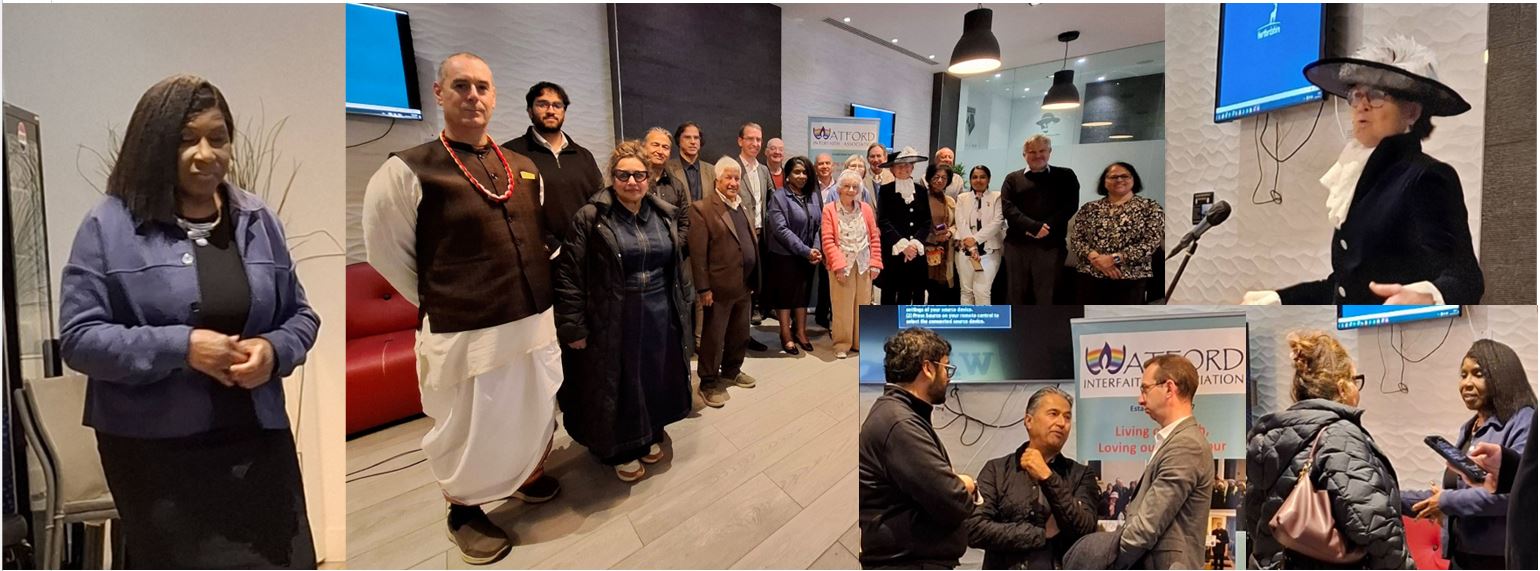
The United in Compassion event on Saturday 4th of October was very heart warming. It was organised by the Brahma Kumaris, hosted by the Watford Quakers at Friends Meeting House and supported by Watford Interfaith Association (WIFA). Members of several faiths told their stories of spiritual events that changed their lives. They came from Christian/Unificationist, Hindu, Sai Baba, Quaker and Brahma Kumaris backgrounds and spoke movingly of their personal experiences, with tears, laughter and deep respect.
Sr Bini introduced the speakers, and a minute's silence was held for those who were suffering after the terrible attack on the synagogue in Manchester during Yom Kippur. Watford's MP Matt Turmaine spoke about how Watford is such a united community in the great diversity of its people, for instance, the riots that were known to be planned to reach Watford last year did not appear because people work together and share with congregations and were prepared. Deputy Mayor Aga Dychton said how beautiful it was to have so many groups under one roof, sharing love and understanding, and she wished everyone love and peace with a big heart.
There was a short, guided meditation with sister Rekha and a dance performance from a young girl in the Kathak style, which told stories in a different form. The gathering concluded with a traditional Quaker silent sitting and sharing of reflections. Sr Bini thanked everyone for coming and making it such a joyful afternoon.
Sacred Space, interfaith discussions:
'Can humanity truly flourish without God or spiritual connection?'
10/05/2025.
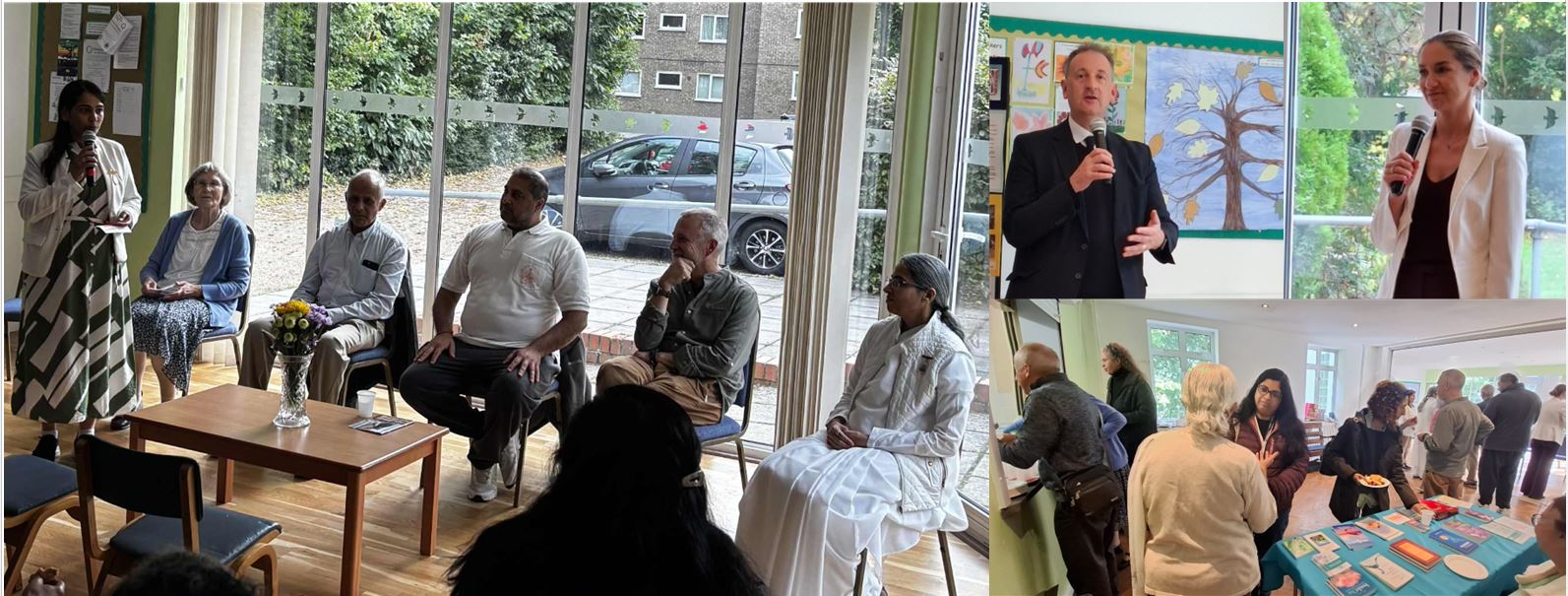
On Saturday 10th May the Brahma Kumaris (a women-led spiritual organisation that teaches meditation) hosted a well-attended Sacred Space event at Friends Meeting House with Watford Interfaith Association. People of eight different faiths and beliefs spoke on the topic of 'Can humanity truly flourish without God or spiritual connection?' Facilitator Yogesh Joshi said, ' These days many identify as non-religious. This discussion is not so much to find answers but for everyone to listen to each other.'
Members of Baha'i, Buddhist, Christian, Hindu, Humanist, Muslim, Quaker and Unificationist faiths and beliefs spoke. Many talked about love and caring for each other being crucial in a flourishing, healthy society. The ethics of religious groups encourage individual and organised help in the community, loving your neighbour and referring to a spiritual source motivates people to act with loving kindness. But so do the ethics of those who do not believe in God or spirit.
Questions about children leaving the faith they were brought up in arose, and the dangers of social media over-use and also nationalism which turns people against each other. Chair of WIFA Jeffrey Bateman thanked Sister Bini and all the BK sisters (and brother) for setting up this event which was much enjoyed by everybody.

Harold Meyer Memorial Lecture: ‘The Future of Interfaith’
29/04/2025.
WIFA's Harold Meyer Memorial Lecture was held on Tuesday 29th April at the Church of Jesus Christ of Latter-Day Saints in Hempstead Road, Watford. The annual lectures are a tribute to Harold Meyer, a child refugee from Nazi Germany who came on the Kindertransport and was looked after by the Jesuits in London who let him keep his Jewish worship. He was a founder member of WIFA in 1977 and became Chair and President.
Dr Iona C. Hine delivered her lecture about the Future of Interfaith following the demise of the Interfaith Network for the UK to which many interfaith groups belonged. Her thought-provoking talk covered studies which the Faculty of Divinity at Cambridge University have been working on. Some of the findings were that religious participation leads to good mental health, how important food and sharing is between faith communities, and how included people can feel in an interfaith environment.
Deputy Lieutenant of Hertfordshire Dame Claire Bertschinger DBE spoke about building bridges between faiths, and harmony, peace and well-being when they work together.
Chair of WIFA Jeffrey Bateman thanked Simon and Bishop Cain for their kind hospitality for this lecture and invited everyone to come to the Watford Peace Garden to rest or do some gardening with others, especially on a Wednesday morning.
To view an extract of Dr Iona C. Hine talk click here.

The benefits of pilgrimages in our life
Prayer/discussion meeting on 26/11/2024.
Following from the WIFA annual pilgrimages to the various faith groups there was a feeling that we should discuss what the purpose of pilgrimage actually is, how it affects us and what we understand about it.
Pilgrimage can mean different things to different people. It can sometimes be a physical journey and sometimes only a spiritual journey. All religions have pilgrimages which is usually to a shrine or sacred place. It can be a long journey to fulfil a ritual obligation, perform an act of devotion to atone their own sins, live an experience of spirituality or implore a grace, a miracle, or a cure.
In the Bahai Faith, it is ordained in the writings to strive to visit the holy places and shrines if you are able to do so and there are no obstacles in your way and pay homage to the central figures who are buried in Israel. This is also true of the Muslim faith in Mecca. In both these Faiths, there is a process of application and management to contain the numbers of pilgrims.
It was explained in the Hindu faith the temples and holy places to visit are in India like the Holy City of Varanasi Vrindavan and the Ganges. In the Holy land of Israel, the Jews and Christians have their main places of pilgrimage and historical importance.
Pilgrimages can feel like the closest thing to being face to face with God. It is a time to connect spiritually and connect with the history of the religion. It is ultimately a time for spiritual reflection, prayer and spiritual renewal.
Written by Owrang M.
‘Does Prayer make a difference? If so, how do we know?
Prayer/discussion meeting on 30/01/2024.
Our interfaith prayer/discussion meeting on Tuesday 30th January was on ‘Does Prayer make a difference? If so, how do we know?
The meeting began with the reading of a beautiful Bahai prayer and each shared how they prayed. Some prayed regularly through the day, some began their day with prayer. Interestingly, there were many different ways of praying apart from simple requests for divine help.
There was the prayer of gratitude, of praise, enabling the recognition of divine bounty; of acknowledgment and trust in God’s lovingkindness and mercy; also affirming God’s presence even when He seemed to be a long way away, and striving to fill thought with His divine character until a sense of peace was gained. In fact, patience was seen to be an essential part of prayer, listening and being prepared to wait.
It was acknowledged too, that we need to be willing to accept that OUR idea of the answer or help we need often falls short of the wonderful answer we are actually given!
We were all agreed that prayer does work, and each face shone when speaking of personal experience not only of its general benefit, but of how it enables the giving of help and inspiration to others. We shared personal accounts of answered prayer, including receiving conviction of God’s existence resulting in deep peace, physical healing, and resolving difficult events.
Many thanks to all who participated. We had a very uplifting and interesting discussion listening to each other perspectives and experiences about prayer.
The Developing Role of Women in Society.
Prayer/Discussion Meetings on Tuesday 25/07/23
On July 25, our monthly prayer/discussion chosen topic was ‘The developing role of Women in Society’. Throughout human history women have mostly been in the shadow of a male dominated world. Françoise M. gave a PPP describing the slow progress of women in been recognised for their unique value and equal rights to men. She concentrated on the Judeo-Christian view and emphasized on the important contribution of Jesus in bringing a change in the way women were seen in society. She then mentioned how women were considered in the early Christian churches and later in the established churches. She explained how the movement for women’s rights developed first in the US in 1848 and then in the UK with the suffragettes. Since then, great progress has been made in recognizing women’s rights, status, and role in our society. ‘Women’s rights are human rights’ We are still on a journey…
We concluded by saying that it is time today for women to come forward and play an increasing important role in the running of our society. Discussions followed with contributions from the Bahai, Hindu, Quaker and Muslim faiths.
'Gossip and Backbitting'
Prayer/Discussion Meetings on Tuesday 25/04/23
We had an interesting discussion on the topic of gossip and backbiting and to initiate conversation we followed it up with many questions on different, challenging scenarios when we need to ask ourselves if we are actually engaging in gossip and or how to avoid it. In both older and modern cultures people gossip. We talk about the faults of others, often behind their backs. We freely criticize their actions, their choices and their characters. With little regard for how much that kind of activity hurts others.
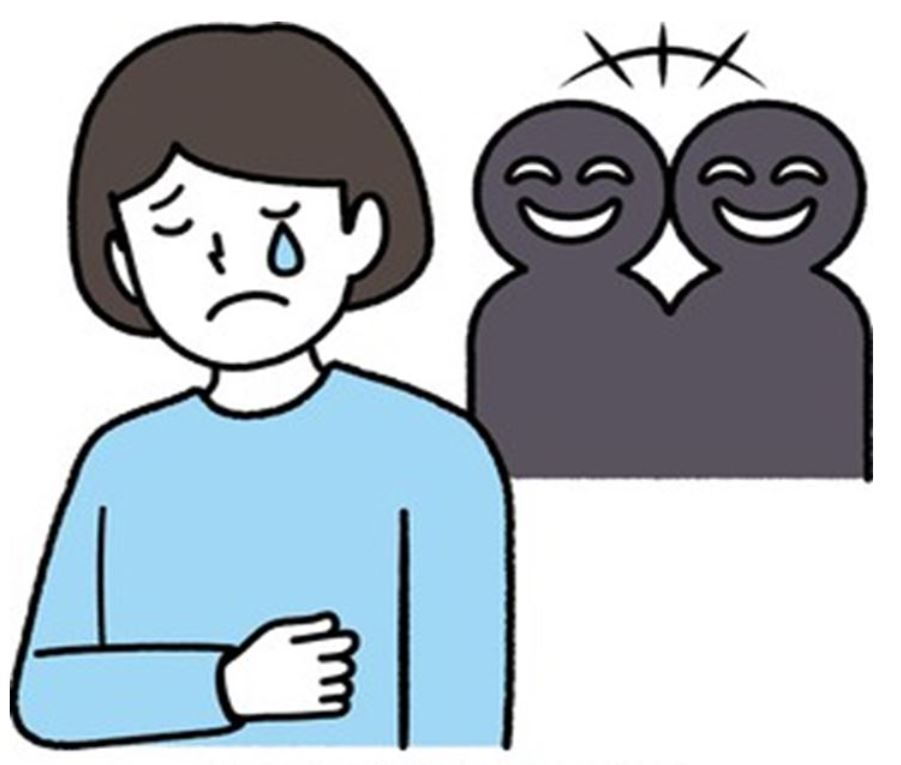
Modern media has constructed an entire industry around gossip and fault-finding - especially where it concerns high-profile public figures like politicians, entertainers and artists. This constant backbiting and gossip are corrosive and spiritually harmful - hurting both the originator and recipient.
Forms of backbiting include following celebrity culture where we tend to talk about them with friends, on Twitter, Instagram etc. Sometimes friendship can be based on gossip. In an effort to achieve a higher level of emotional intimacy with a new friend, we open up. and sometimes we bond over our annoyance with a co-worker, superior or mutual acquaintance.